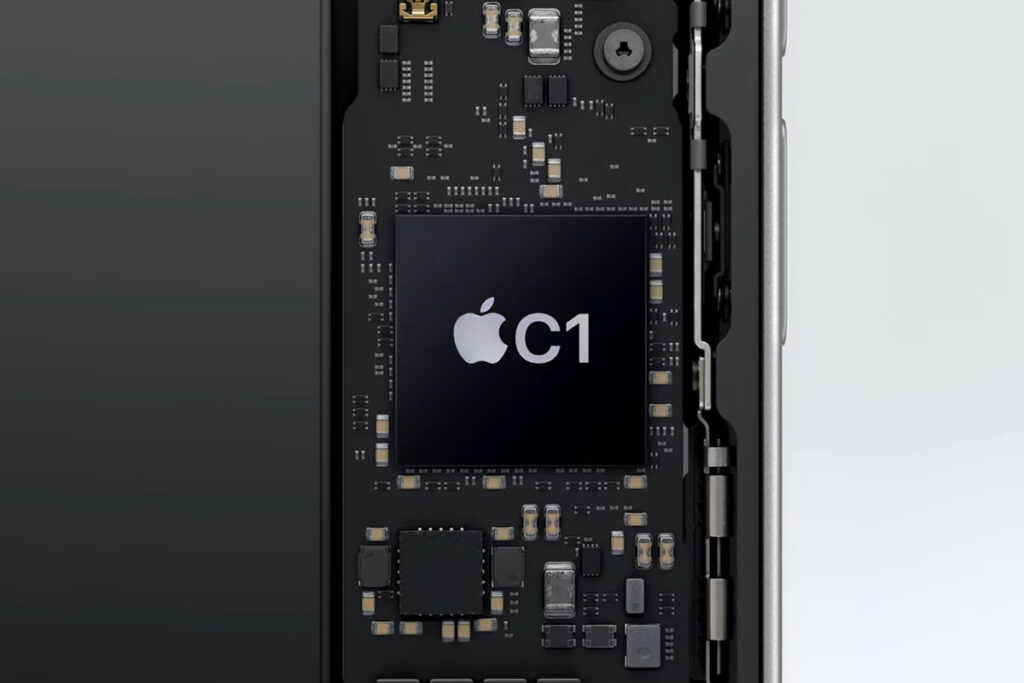
Apple Unveils C1: A Game-Changing Custom iPhone Modem After Years of Development
After six years of research and billions of dollars in investment, Apple has finally introduced its first-ever in-house cellular modem—the C1. Featured in the newly launched iPhone 16E, this breakthrough technology marks a major step toward reducing Apple’s dependence on Qualcomm for modem components.
What Makes the Apple C1 Modem Unique?
Apple has long sought to integrate its hardware and software ecosystem seamlessly, and the C1 modem is a testament to this mission. Designed with power efficiency in mind, the C1 modem is tightly integrated with the iPhone’s processor, optimizing data transfer speeds while extending battery life. However, one notable limitation is the absence of millimeter-wave (mmWave) 5G capabilities, which means it primarily supports standard 5G connectivity.
Apple’s Road to Independence: The C1 Journey
The development of the C1 modem stems from Apple’s strategic $1 billion acquisition of Intel’s smartphone modem business in 2019. Over the years, Apple engineers have fine-tuned this technology to ensure peak performance, and the results are finally here with the iPhone 16E.
Apple’s senior vice president of hardware technologies, Johny Srouji, described the C1 subsystem as one of the most complex technologies the company has ever built. The modem incorporates a 4-nanometer baseband chip paired with a 7-nanometer transceiver, balancing performance and efficiency.
How Does the C1 Compare to Qualcomm’s Modems?
While Qualcomm’s modems have long been the gold standard for Apple devices, the introduction of the C1 represents a shift in the industry landscape. Although the C1 lacks mmWave support—something Qualcomm’s chips currently offer—it makes up for this with superior power management and deeper integration with Apple’s A18 processor.
Apple executives have hinted at expanding the C1 modem’s usage across various product lines, though they have not provided a definitive timeline. Meanwhile, Qualcomm has acknowledged that Apple’s transition to in-house modems will likely reduce its share of iPhone modems to around 20% by 2026.
Ensuring Global Compatibility and Performance
To guarantee seamless performance worldwide, Apple rigorously tested the C1 modem with 180 carriers across 55 countries. Arun Mathias, Apple’s vice president for wireless software, highlighted that the C1 is designed to prioritize time-sensitive data transfers even in congested network conditions. This ensures a smoother and more reliable user experience.
iPhone 16E: More Than Just a Modem Upgrade
The iPhone 16E, featuring the C1 modem, is priced at $599 and is equipped with Apple’s latest A18 processor. In addition to improved connectivity, the device boasts advanced AI capabilities that enhance overall performance and battery life. The C1 subsystem plays a crucial role in maximizing these benefits, making the iPhone 16E an attractive option for users looking for a balance of performance and efficiency.
What’s Next for Apple’s Modem Technology?
Apple’s approach isn’t about directly competing with modem giants like Qualcomm and MediaTek; rather, it’s about creating a modem that is tailor-made for Apple products. This shift could lead to even greater hardware-software optimization in future iPhones, enhancing speed, efficiency, and overall performance.
As Apple continues refining its modem technology, the company is likely to introduce even more powerful iterations in the coming years. With this launch, Apple has taken a significant step toward full control over its hardware ecosystem, a move that could reshape the future of mobile connectivity.
Final Thoughts
Apple’s C1 modem marks a bold new era for the tech giant. By reducing reliance on third-party suppliers and focusing on in-house innovation, Apple is paving the way for future advancements in mobile technology. As the C1 modem evolves, it will be interesting to see how it stacks up against industry leaders in the long run. For now, iPhone users can expect better power efficiency, seamless integration, and a glimpse into Apple’s long-term vision for mobile connectivity.