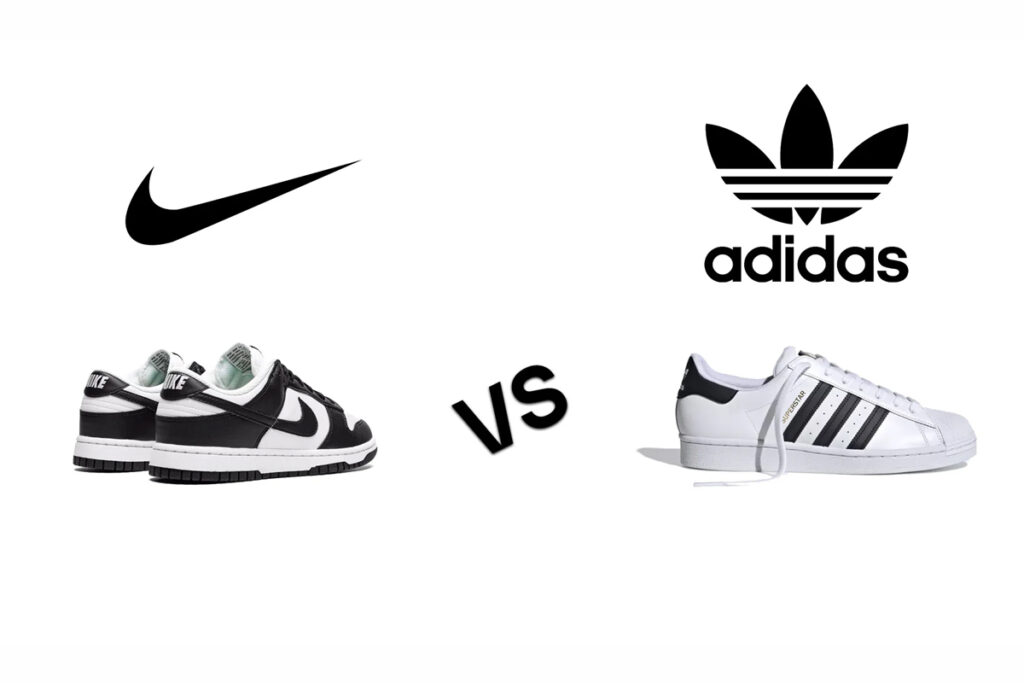
How One Adidas Misstep Turned Nike Into the King of Sneakers
The 1980s marked a seismic shift in the sneaker industry. Nike, once a small player, capitalized on a monumental error by Adidas to secure its position as the global leader in athletic footwear. This pivotal moment? Adidas’s failure to sign Michael Jordan was a missed opportunity that Nike masterfully exploited to change the sneaker game forever.
The Backstory: Adidas’s Complacency in the 1980s
In the 1970s, Adidas dominated the sneaker market, holding sway over sports and street culture. Basketball, in particular, was the realm of Adidas and Converse. Nike, then a fledgling company known for its innovative “waffle pattern” soles, was gaining traction in track and field but struggled to make inroads into basketball. By the early 1980s, Nike’s growth was undeniable—sales surged from $28.7 million in 1973 to $867 million by 1983—but the company faced its first quarterly loss in 1984. Enter Michael Jordan. Selected third overall in the 1984 NBA Draft by the Chicago Bulls, Jordan was a rising star with enormous potential. Despite his preference for Adidas, the brand failed to recognize his value and dismissed him as “too small” for a major contract. This misstep opened the door for Nike.
The Converse Fumble
Jordan’s first choice for a sponsorship deal was Adidas, but when they declined, he turned to Converse. Despite the brand’s deep connection to basketball—Converse’s president famously said, “We are basketball”—Jordan found their offer uninspiring. Converse presented a standard $100,000-per-year deal, but their lack of innovation left Jordan unimpressed. This hesitation became another turning point in sneaker history.
Nike’s Bold Gamble
Nike recognized an opportunity and pursued Jordan relentlessly. Initially uninterested, Jordan’s perspective shifted after Nike presented a bold pitch: a customized red-and-black shoe design tailored to his preferences. The brand’s willingness to innovate won him over. Nike offered Jordan a groundbreaking five-year deal worth $500,000 annually, plus stock options and perks—a package valued at $7 million. Despite his loyalty to Adidas, Jordan finally signed with Nike after Adidas refused to match the offer.
The Birth of Air Jordan
The Air Jordan 1 debuted during the 1984-85 NBA season. Its bold red and black design violated the NBA’s uniform code, resulting in a $5,000 fine per game. Rather than shy away, Nike embraced the controversy, turning the penalty into a marketing triumph. The slogan “NBA cannot stop you from wearing these shoes” resonated with fans, transforming the Air Jordan 1 into an instant cultural phenomenon.
Jordan’s performance on the court was equally electrifying. In his rookie season, he averaged 28.2 points per game, earned Rookie of the Year honors, and became an All-Star. By the end of 1985, Air Jordan sales had generated over $100 million in revenue.
Nike’s Meteoric Rise
Nike’s partnership with Jordan proved revolutionary. By 2019, the brand controlled 86% of the basketball shoe market and 96% of the lifestyle-basketball market. During the 2019-20 NBA season, 77% of players wore Nike or Air Jordan sneakers. That year, Nike’s revenue reached $40 billion, outpacing Adidas by 60%.
Today, Nike’s market capitalization is $112 billion—three times that of Adidas. The Air Jordan franchise remains a cornerstone of Nike’s success, cementing its legacy as one of the most iconic marketing strategies in sports history.
Lessons from the Sneaker Wars
Adidas’s failure to recognize Michael Jordan’s potential underscores the dangers of complacency. Nike’s willingness to take risks, innovate, and capitalize on missed opportunities transformed the company into a global powerhouse. The story of Air Jordan is not just a tale of sneakers; it’s a masterclass in vision, strategy, and the power of seizing the moment.