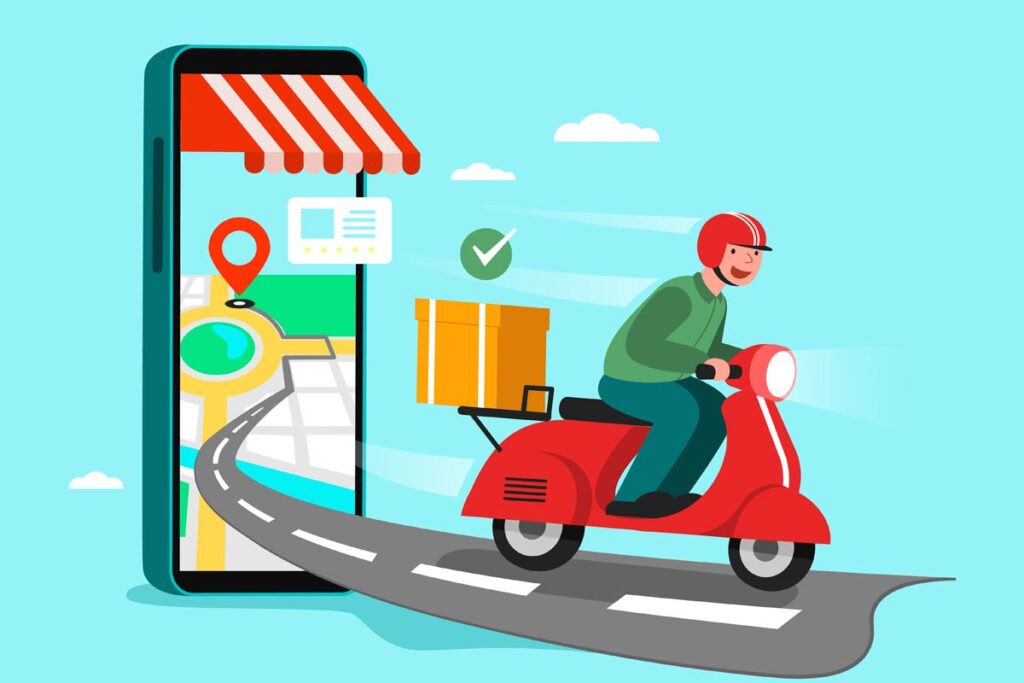
Is Quick Commerce Sustainable? The Rise and Future of Ultra-Fast Food Delivery in India
Quick commerce (Q-commerce) is reshaping India’s food retail landscape, with platforms like Zepto and Blinkit offering ultra-fast deliveries of essential goods. By significantly influencing the fast-moving consumer goods (FMCG) sector, Q-commerce has emerged as a key player in the e-commerce ecosystem.
While challenges persist, the market is projected to reach $5 billion by 2025 and is expected to grow even further. However, concerns related to delivery safety, sustainability, and consumer trust need to be addressed for long-term viability.
The Backbone of Quick Commerce: Dark Stores and Logistics Networks
Q-commerce platforms operate on a foundation of dark stores—small fulfillment centers strategically placed to ensure rapid order processing and delivery. These are supported by an extensive network of warehouses and advanced logistics management. Metro cities like Bengaluru, Delhi, and Mumbai have become hotspots for Q-commerce due to their high population density and demand for convenience. However, expanding into Tier-2 and Tier-3 cities presents challenges in terms of infrastructure and consumer adaptability.
Market Expansion and Investment Surge
The growth of Q-commerce has been fueled by a surge in venture capital investments. So far, the industry has attracted nearly $3 billion, enabling platforms to expand their services and product offerings. Recently, Zepto secured $350 million in funding, further solidifying its position in the market.
Meanwhile, Blinkit has seen a significant increase in average order value (AOV), jumping from INR 250 to INR 625, indicating an evolution in consumer spending patterns.
Challenges and Ethical Concerns
Despite its rapid rise, Q-commerce is not without its challenges. Consumers have expressed concerns over order failures, higher prices compared to local Kirana stores, and a lack of diverse product selections. Additionally, the impact on delivery personnel, including safety risks and work-life balance, has sparked discussions on ethical business practices. The convenience of instant deliveries must be balanced with sustainable operational strategies to ensure a positive long-term impact.
The Consumer Shift Towards On-Demand Convenience
Urban consumers are increasingly prioritizing convenience, with recent surveys showing that 64% of respondents order food at least once a week. As Q-commerce gains traction, its influence on traditional retail and online supermarkets like Bigbasket and Reliance Mart has become more pronounced. Companies must adapt to changing consumer behaviors while maintaining affordability and reliability to remain competitive.
The Future of Quick Commerce in India
With the consumer base projected to grow from 26.2 million in 2024 to 60.6 million by 2029, Q-commerce is set to play a transformative role in India’s retail sector. As the industry matures, addressing concerns around pricing, sustainability, and delivery efficiency will be crucial. By leveraging advanced technology and refining logistics networks, Q-commerce platforms can establish a sustainable model that benefits both businesses and consumers.
Conclusion
The evolution of Q-commerce signifies a fundamental shift in India’s retail and e-commerce landscape. While its rapid growth presents immense opportunities, companies must focus on ethical business practices and sustainable strategies to ensure long-term success. As the market continues to expand, Q-commerce is set to redefine the future of retail in India, making it an industry to watch closely.